
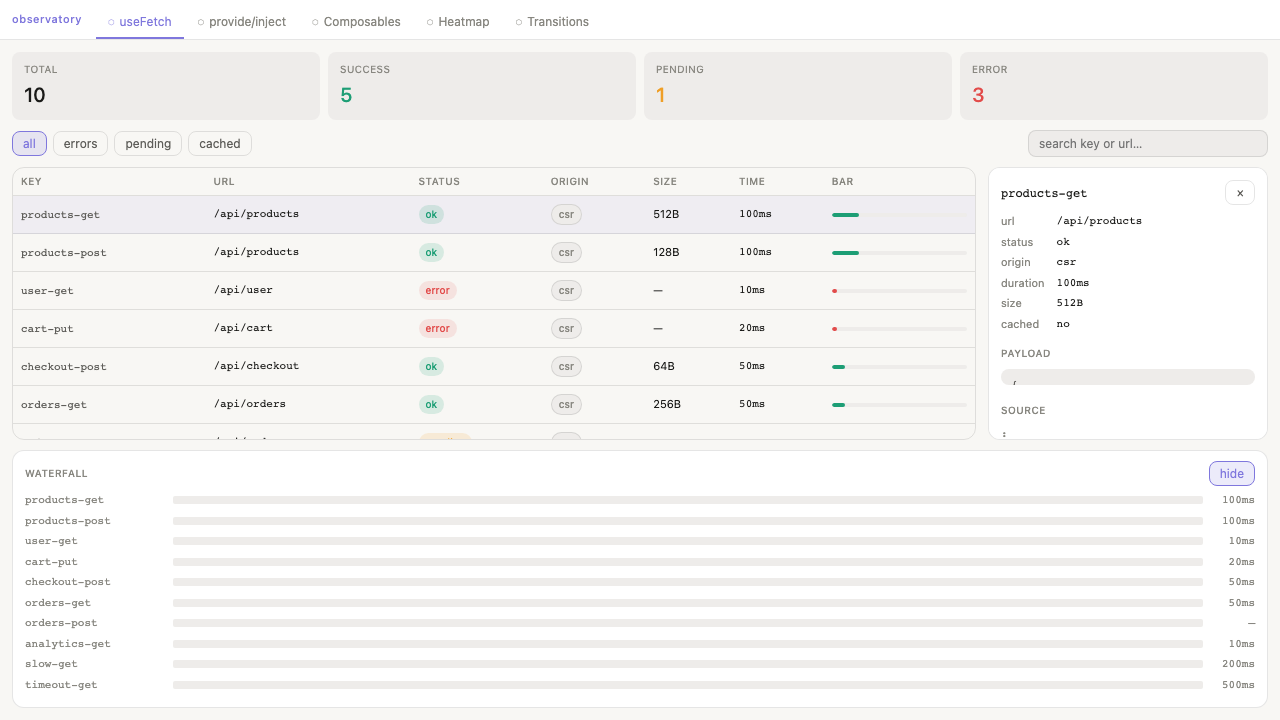
What it tracks
- Request key and URL
- HTTP method and caller (
useFetch/useAsyncData/$fetch/$fetch.raw) - SSR or CSR origin
- Status and duration
- Payload size
- Waterfall timeline position
Direct $fetch, $fetch.raw, and instances from $fetch.create() are recorded on the client in addition to the useFetch / useAsyncData family. Nested HTTP from those composables is not duplicated.
Paging and virtualization
- Rows are appended with infinite scroll.
fetchPageSizecontrols rows loaded per scroll step (default20).- Visible rows are virtualized to keep DOM size stable while scrolling.
What to watch for
- Duplicate fetches across navigation
- Slow outliers in duration
- Payloads near your
maxPayloadBytescap
Quick workflow
- Load a page with multiple async requests.
- Sort by duration and inspect the slowest calls.
- Correlate cache keys with your composables/pages.